Your Engineers Are Already Vibe Coding. Here's How to Make It Production-Ready.
Why does AI-generated code keep dying on the way to production?
Your Engineers Are Already Vibe Coding. Here's How to Make It Production-Ready.
I've been on dozens of calls with engineering leaders at mid-to-large companies over the past few months.
And I keep hearing the same thing.
Not word-for-word. But the vibe (pun intended) is always identical:
"Yeah… we know we need to use more AI. But honestly? The code it spits out creates more work than it saves."
Here's what's actually happening: your engineers (yes, even the senior ones) are already using Cursor, Claude Code, Copilot, or Lovable. They're vibe coding whether you've sanctioned it or not.
The question isn't "should we adopt AI-assisted coding?"
The question is: why does AI-generated code keep dying on the way to production?
The Real Problem Nobody Talks About
AI doesn't write "bad" code.
It writes uninformed code.
Think about it. When a new engineer joins your team, they don't just need to know how to code. They need to absorb months of tribal knowledge. Your naming conventions. Your architectural patterns. The reason you use that one weird middleware that nobody documented. The security checklist that lives in someone's head.
AI tools have none of that context. Zero.
So when your PM opens Cursor and builds a feature in 45 minutes (which used to take a sprint) the code works. It runs. It demos beautifully.
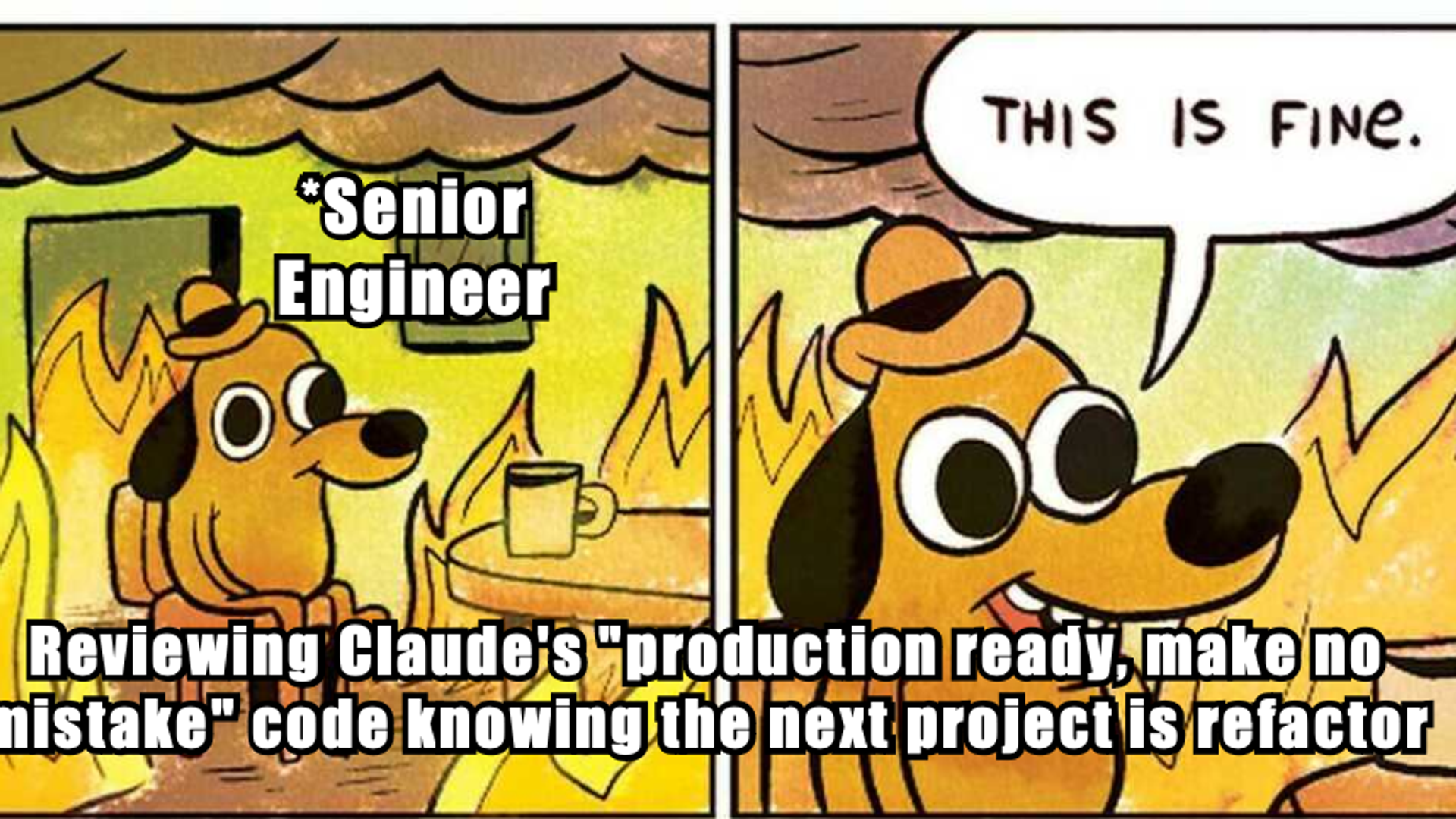
But it doesn't match your coding standards. It's missing your security checks. It's structured in a way that makes your senior engineers want to throw their laptop out a window.
And now the "time saved" by AI gets eaten up by the time spent fixing AI's output.
This is the trap. And almost every company I talk to is stuck in it.
The Math That Should Scare You
Here's a rough version of what I keep seeing:
Before AI coding tools:
- Engineer writes feature → PR review → Ship. Total: ~5 days.
After AI coding tools (without a production layer):
- PM or junior dev vibe codes feature in 2 hours → Senior engineer reviews → Finds 47 issues → Rewrites half of it → Another review → Ship. Total: ~6 days.
Read that again. Slower than before. With more frustration. And the senior engineer (your most expensive, hardest-to-replace person) just became a full-time code janitor.
This is why CTOs tell me "AI creates more work." They're not wrong. They're just solving the wrong problem.
The problem isn't the AI. The problem is the gap between "AI wrote code" and "this code is production-ready."
What If That Gap Closed Automatically?
Imagine this instead:
Your PM vibe codes a feature in Cursor. They connect the repo to a tool that already knows your company's coding standards, because it learned them from your best repos. The gold standard ones. The ones your principal engineers are proud of.
Before anyone reviews a single line, the code gets automatically refactored to match those standards.
Then it runs through your security checks, the ones your security team defined, and flags any issues. Not in jargon. In plain English. "This endpoint is missing rate limiting." "This database query is vulnerable to injection." With a button that says "Fix Now."
By the time a human reviewer sees the PR, they're not reading through hundreds of lines of AI-generated spaghetti. They're reading a concise deployment summary. Approve or reject. Done.
This isn't hypothetical. This is what we built at VibeOps.
Two Features That Change Everything
1. Policy Discovery
You attach your best GitHub repos, the ones that represent how your org actually wants code written. VibeOps learns your patterns, your conventions, your architecture.
Then when anyone ships through VibeOps, the AI-generated code gets refactored to match your org's standards. Automatically.
Your PM doesn't need to know your coding practices. Your junior engineer doesn't need three months of onboarding. The code arrives looking like your best engineers wrote it.
2. Security Rules
Your admin configures the security checks once. OWASP top 10, your custom compliance requirements, whatever your org needs.
Every repo that ships through VibeOps gets scanned. Issues show up in plain language. One-click fix. No back-and-forth Slack threads with the security team.
The result? The person who vibe coded the feature can actually ship it. And the production engineer who approves it can do so confidently, without reading every line.
This Isn't About Replacing Engineers
Let me be clear about something.
VibeOps doesn't replace your senior engineers. It gives them their time back.
Instead of babysitting AI-generated PRs, they go back to doing what you hired them for — designing systems, solving hard problems, building the stuff that actually moves the needle.
And your PMs, junior devs, and non-traditional contributors? They become real shippers. Not "built a demo" shippers. "This is in production and serving customers" shippers.
That's the unlock. Not "AI writes code faster." It's "AI-written code actually ships."
The Pressure Is Real. The Solution Doesn't Have to Be Painful.
Every org I talk to is feeling the squeeze. Boards want AI adoption metrics. Competitors are shipping faster. Engineers are using AI tools whether leadership approves or not.
You can either fight it. Or you can put the right guardrails in place so the whole team can move fast without breaking things.
That's what VibeOps does. It's the production layer between AI-assisted coding and your production environment.
Your team is already vibe coding. It's time to make it production-ready.
Written by
Sifat H
GTM - VibeOps | Founder - AmarCV