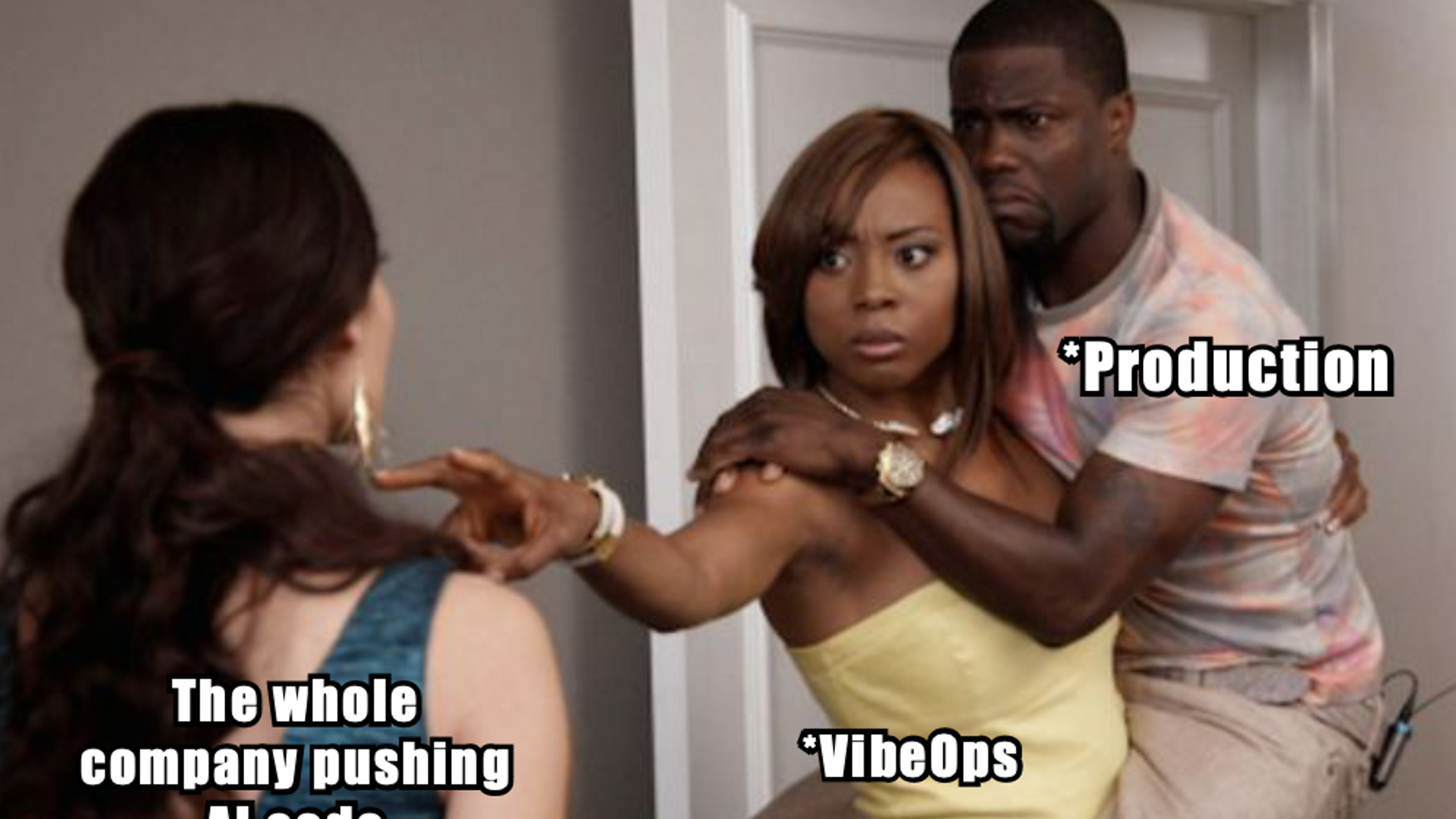
How to Vibe Code In Enterprise Without Wrecking Your Codebase
We want more AI. We just can't trust the output.
How to Let Your Whole Team Vibe Code Without Wrecking Your Codebase
There's a war happening inside every enterprise engineering org right now.
On one side: leadership, pushing hard to adopt AI-assisted coding. Ship faster. Do more with less. "Our competitors are using Cursor, why aren't we?"
On the other side: senior engineers and production teams, pulling their hair out. "Sure, AI writes code fast. But who's cleaning up the mess?"
Both sides are right. And that's the problem.
I've spent the last few months talking to engineering leaders, CTOs, and heads of platform at companies ranging from 50 to 5,000 engineers. The conversation always lands in the same place:
"We want more AI. We just can't trust the output."
So let's talk about how to actually fix that, not by slowing down AI adoption, but by making AI-generated code trustworthy enough to ship.
Why "Just Review It Harder" Doesn't Work
The default solution most orgs try is brute force: let people vibe code, then have senior engineers review everything more carefully.
This fails for three reasons.
It doesn't scale. If you 10x the volume of code being written (which AI tools do), you'd need to 10x your review capacity. You don't have 10x more senior engineers. You never will.
It burns out your best people. Your principal engineers didn't sign up to be code cops. Every hour they spend line-by-line reviewing AI-generated PRs is an hour they're not designing systems or mentoring the team.
It creates a bottleneck worse than what you had before. Congratulations, code gets written in minutes and sits in review for weeks. You've just moved the bottleneck from "writing" to "approving." Net gain: zero. Net frustration: through the roof.
The "just review it harder" approach is like hiring 50 new writers who don't know your style guide, then asking your editor-in-chief to personally fix every article. It collapses under its own weight.
The Actual Gap: Context, Not Capability
Here's the thing people miss about AI coding tools.
The AI is capable. GPT-4, Claude, the models behind Cursor and Copilot; they can write solid code. The problem isn't capability.
It's context.
When your best engineer writes code, they're not just writing code. They're applying years of accumulated knowledge about:
- How your org structures services
- What naming conventions you use
- Which security checks are non-negotiable
- The architectural patterns that keep your system maintainable
- The hundred unwritten rules that exist in every engineering org
AI doesn't have any of this. It writes generic "good" code. But generic good code in your codebase is a liability.
This is why a feature that takes 30 minutes to vibe code takes 3 days to make production-ready. The code isn't broken. It just isn't yours.
The Missing Layer
What if there was a layer between "AI wrote this code" and "this code hits production"?
A layer that:
- Knows how your org actually codes, not from documentation (let's be honest, yours is outdated), but from your actual best repositories
- Enforces your security requirements automatically, before a human ever sees the PR
- Translates technical issues into plain language, so the person who wrote the code can actually understand and fix problems themselves
This is the layer we built. It's called VibeOps, and it exists specifically to solve the enterprise "we want AI but can't trust it" problem.
Here's how it works in practice.
Making AI Code Match Your Standards (Automatically)
The Policy Discovery feature is probably the most important thing we built.
The concept is simple: you point VibeOps at your best GitHub repos. The gold standard ones. The repos your engineering leads consider "this is how we write code here."
VibeOps learns those patterns.
Now when anyone, a PM, a junior engineer, a designer who learned to code last month, ships a repo through VibeOps, the AI-generated code gets automatically refactored to match your org's standards.
Variable naming? Fixed. Architecture patterns? Aligned. That weird-but-important way your team handles error logging? Handled.
The person who vibe coded the feature doesn't need to know any of this. VibeOps handles the translation from "generic AI code" to "code that looks like your team wrote it."
Think of it as an automatic style guide enforcement — except it's not just style. It's structure, patterns, and practices. The stuff that actually matters.
Security That Doesn't Slow You Down
The second piece is Security Rules.
Your org admin configures the security checks once. OWASP vulnerabilities, compliance requirements, custom rules; whatever your org needs.
After that, every repo that ships through VibeOps gets scanned automatically. And here's the part that matters: the issues show up in plain English.
Not "CVE-2024-XXXXX detected in dependency tree."
More like: "This API endpoint doesn't have rate limiting. An attacker could overwhelm your service with requests."
Next to every issue is a "Fix Now" button. One click. The fix gets applied. The person who wrote the code, even if they've never heard of OWASP, can resolve security issues themselves.
No back-and-forth with the security team. No blocked PRs with cryptic comments. No three-day review cycles.
What Your Senior Engineers See Instead
Here's maybe my favorite part.
When the code finally reaches your production engineer or approver, they don't see a 2,000-line diff of AI-generated code.
They see a concise deployment summary. What the service does. What security checks passed. What was refactored. What the deployment plan looks like.
Approve or reject. That's it.
Your production engineer goes from "read every line of code from someone who doesn't know our patterns" to "review a summary and make a decision." That's a 10x improvement in their day. And it means PRs actually move.
Who This Is Actually For
Let me be specific about who benefits here.
If you're a CTO or VP of Engineering who's under board pressure to show AI adoption but terrified of the quality implications, this is your answer. AI adoption that doesn't compromise production quality.
If you're a senior/staff engineer who's become an involuntary code reviewer for every AI-generated PR, this gives you your time back. Review summaries, not spaghetti.
If you're a PM or junior dev who can build features with AI tools but keeps getting blocked in review, this is how your code actually ships. VibeOps makes your output match the standards your org expects.
If you're a founder or team lead at a fast-moving startup where "move fast and break things" is hitting its limits, this is the grown-up version of vibe coding. Speed with guardrails.
The Bottom Line
The AI coding wave isn't coming. It's here. Your team is already using these tools, whether you've officially adopted them or not.
You have two options:
Option A: Fight it. Add more review gates. Slow everything down. Watch your best engineers burn out and your competitors ship faster.
Option B: Put the right layer in place. Let your whole team vibe code. Let VibeOps handle the gap between "AI wrote it" and "it's production-ready."
The companies that figure this out first win. Not because they have better AI. But because they figured out how to trust it.
Let your team vibe code. Make the output production-grade.
Written by
Sifat H
GTM - VibeOps | Founder - AmarCV